Answering the need for clean, portable, and organized power on boats, kayaks, RVs, and off-grid setups, a smart marine battery box combines a battery enclosure with built-in power distribution, protection, and monitoring. This guide highlights five top options suitable for trolling motors, fish finders, lights, and USB devices. Each choice targets a specific user type—compact boats, extended off-grid adventures, high-demand devices, or all-in-one convenience—so you can pick the best fit for your watercraft and power needs.
Overview at a glance: the table below summarizes key strengths and intended use. Note that batteries are often not included unless stated in the product name.
| Product | |||
|---|---|---|---|
| Newport Trolling Motor Smart Battery Box Power Center with USB and DC Ports, Medium | Casual kayaks and small boats | External terminals; all-in-one power hub | Not included |
| SUNAPEX Smart Battery Box 12V/24V Power Center (No Battery) | Users needing built-in safety and multiple ports | Digital voltmeter; integrated lighting; overload protection | Battery not included |
| DR.PREPARE Trolling Motor Smart Battery Box (Batteries Not Included) | Versatile off-grid and marine setups | Real-time voltage display; multiple ports including QC/PD | Battery not included |
| AmarinePlay Trolling Motor Smart Battery Box Power Center | High-demand devices and larger boats | Dual 50A Anderson plugs; multiple ports | Battery not included |
| Newport Smart Trolling Motor Battery Box Power Center with USB Port (Includes Deep Cycle Battery) | Immediate setup on boats needing a ready-to-use kit | Integrated with a 12V50Ah deep-cycle battery | Yes, battery included |
Newport Trolling Motor Smart Battery Box Power Center with USB and DC Ports, Medium
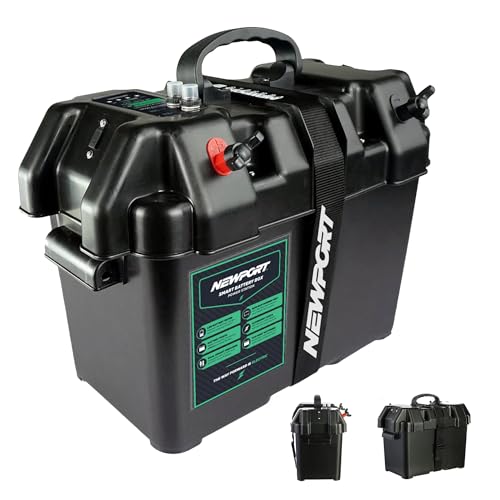
Best for small watercraft that need a clean, plug-and-play power hub. This Newport unit emphasizes a tidy setup, avoiding exposed terminals and messy wiring. It adds built-in USB and 12V DC ports to power phones, GPS, and onboard electronics without extra wiring. Best for kayaks, jon boats, and other compact crafts where space is limited and quick setup matters.
Who it’s for: boaters seeking a simple, organized power center that reduces on-deck clutter. Why selected: external battery terminals simplify connections while keeping the unit compact. Caution: the box does not include a battery by default, so you’ll need to supply one separately.
SUNAPEX Smart Battery Box 12V/24V Power Center (No Battery)

Best for users who need strong protection and monitoring features in a compact form. This SUNAPEX model includes a 16A overload switch, a digital voltmeter, and built-in lighting for nighttime use. It also provides USB ports and a cigarette lighter socket, making it suitable for small to mid-sized power needs on boats, RVs, or solar setups.
Who it’s for: skippers prioritizing safety and easy visibility of battery status. Why selected: integrated protection reduces risk of overcurrent and short circuits. Caution: requires separate battery purchase; no battery included.
SUNAPEX Smart Battery Box 12V/24V Power Center Pro

Better for higher-demand setups that benefit from high-current interfaces. This Pro version adds two 30A Anderson plugs, plus QC3.0 and PD Type-C ports, making it ideal for charging or running devices like fridges and ovens on the go. Safety is reinforced with a 16A overload protection and dedicated fuse protection for the Anderson ports.
Who it’s for: campers or boaters needing robust high-current charging and versatile port options. Why selected: two 30A Anderson plugs enable efficient, high-power connections. Caution: higher power requires careful fuse management and battery capacity planning.
DR.PREPARE Trolling Motor Smart Battery Box (Batteries Not Included)
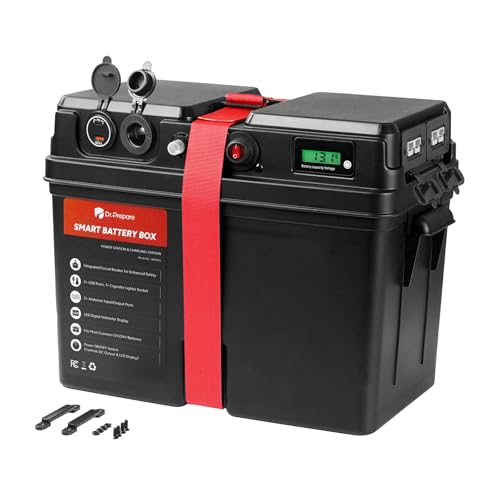
Best for a versatile off-grid or marine setup requiring real-time monitoring. This unit supports 12V and 24V operations and provides a USB-C PD, USB-A QC 3.0, dual Anderson ports, and a built-in LED display showing voltage and low-voltage alerts. It’s well-suited for trolling motors, RVs, solar, and other outdoor power needs.
Who it’s for: users who want an all-in-one portable center with voltage awareness. Why selected: features like the real-time voltage display aid in proactive maintenance. Caution: batteries are not included, and oversized batteries may require checking fit inside the box.
Trolling Motor Smart Battery Box Power Center 12/24V (AmarinePlay)

Best for boats that need a multi-port, flexible power center with strong charging options. It offers two 50A Anderson plugs, USB-C and USB-A ports, and a cigarette lighter socket. This configuration supports a range of devices from trolling motors to fish finders and lighting systems, making it a solid all-around option.
Who it’s for: users who want high-current output and broad compatibility. Why selected: the dual 50A Anderson connectors expand charging and powering potential. Caution: battery dimensions must fit the box; check backing dimensions before purchase.
Newport Smart Trolling Motor Battery Box Power Center with USB Port + Newport 12V50Ah Battery Kit
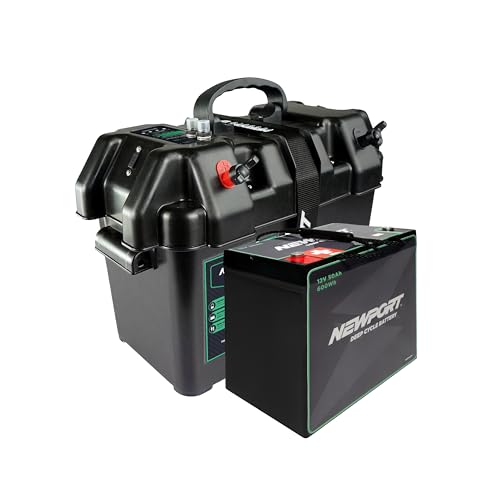
Best for immediate deployment on boats that want a complete ready-to-use system. This Newport kit includes a 12V50Ah deep cycle AGM battery, simplifying the setup for trolling motors and onboard electronics. It features external battery ports and dual integrated circuit breakers for added protection against electrical faults.
Who it’s for: buyers seeking a turnkey solution with a battery included. Why selected: eliminates the step of sourcing a separate battery and provides straightforward power distribution. Caution: the included battery adds weight and requires appropriate mounting considerations on smaller craft.
Buying Guide: Key Purchase Considerations
- Power needs: Match the box’s amperage capacity and port options to your devices. If you run a fridge, inverter, or multiple peripherals, prioritize multiple high-current connectors and a clear protection scheme.
- Battery compatibility: Check the box’s supported battery types and sizes. Some boxes fit Group 24/27/31 batteries, while others accommodate wider ranges; confirm dimensions to ensure a proper fit.
- Protection features: Look for overload protection, short-circuit protection, and resettable circuit breakers. A digital voltmeter or real-time battery monitor helps prevent unexpected power loss.
- Port variety: USB-C PD, USB-A QC, cigarette lighter sockets, and Anderson connectors provide flexible charging and power delivery for a range of devices.
- Portability and installation: For small boats, a compact form factor with external terminals reduces waterline clutter. For larger setups, consider the ease of mounting and accessibility of terminals.
- Battery inclusion: Some kits include a battery; others require you to supply your own. Decide based on whether you want a turnkey solution or maximum battery customization.
- Durability and waterproofing: Marine environments demand rugged enclosures with good sealing and corrosion resistance. Check enclosure material and ingress protection if available.
Frequently Asked Questions
- What is a smart battery box?
A smart battery box is a weather-protected enclosure that houses a battery and provides integrated ports, circuit protection, and monitoring for marine or off-grid power needs. - Can I use any battery with these boxes?
Most boxes support common 12V/24V deep-cycle batteries, but verify size and terminal compatibility before purchasing. - Do these units include a battery?
Some kits include a battery; many are battery-not-included. Always check the product listing for battery availability. - What devices can I power with these boxes?
Common uses include trolling motors, fish finders, GPS units, radios, lighting, USB devices, refrigerators, and small appliances with appropriate current ratings. - Are there safety considerations?
Yes. Use proper fuses or breakers, monitor voltage levels, avoid overloading ports, and ensure secure mounting to prevent movement on a boat. - Which box is best for high-current needs?
Models with dual high-current Anderson plugs (50A) are better for high-demand devices, such as refrigerators or power-hungry electronics.