Looking for a reliable push pole or shallow water anchor for a kayak? This guide highlights five top options that help keep your kayak steady in shallow water, whether you’re fishing, paddling in calm lakes, or navigating coastal flats. The best picks are suited for anglers, recreational kayakers, and beach-going paddlers who want better control and minimal drift in windy or current-prone conditions. Below is a quick summary table and clear product-by-product details to help you compare features, materials, and usability at a glance.
| Product | Length | Material | Best For |
|---|---|---|---|
| EDSRDPLT 7.75′ Anchor and Push Pole | 7.75 ft | Fiberglass, nylon, aluminum | Balanced push pole with compass for navigation |
| itayak 8.63′ Shallow Water Anchor Pole | 8.63 ft | Fiberglass reinforced PA66 | High strength, two-piece design |
| SFNSM 8.45ft Shallow Water Anchor Pole | 8.45 ft | Fiberglass | Universal anchoring for kayaks, canoes, paddleboards |
| Pelican Anchor and Push Pole | 8 ft | Fiberglass shaft with nylon handle | Push pole with integrated grip for shallow water |
| Medonala Marine Shallow Water Anchor Pole | 125 in (≈10.4 ft) | Stainless steel shaft with T-handle | Heavy-duty sand anchor for flats and bays |
EDSRDPLT 2006 7.75′ Anchor And Push Pole

Length: 236 cm (7.75’). Diameter: 3.1 cm (1.22″). The buoyant two-piece design floats and stores compactly, and it is compatible with standard paddle holders. Built for multi-use as a push pole, with a T-handle and integrated hook. The EVA foam grip is non-slip, and a built-in compass aids basic navigation. Materials include reinforced nylon, engineering-grade fiberglass, aviation-grade aluminum, with a 316 stainless steel tip to resist rust. Best for kayakers needing a floating, compact pole with navigation aid. Caution: respect glass fiber handling during cuts or assembly.
Who it’s best for: paddlers seeking a floating, durable push pole with navigational features and a compact form for storage on a kayak console or paddle holder. Why selected: combines floatation, compass, and a rugged material mix for shallow water use.
itayak 8.63′ Shallow Water Anchor Pole

Total length: 2.63 m (8.63′). Two-piece high-strength fiberglass reinforced PA66 with carbon fiber connectors. The stainless steel tip provides strong holding power. Warning about potential glass fiber splinters at cuts; gloves recommended. This setup is lightweight yet strong, designed to penetrate shallow bottoms efficiently. Best for: anglers and paddlers who want a durable, easily disassembled pole for storage in tight spaces. Caution: wear gloves during handling to avoid fiberglass exposure.
Who it’s best for: kayakers who prioritize a robust two-piece design and corrosion resistance for shallow waters. Why selected: superior strength-to-weight and easy storage in kayak compartments.
SFNSM 8.45ft Shallow Water Anchor Pole

Length: 8.45 ft. This anchor pole embeds into mud or sand to prevent drifting. It is suitable for kayaks, canoes, and paddleboards and doubles as a push pole. Detachable two-piece design makes storage simple for car trips or long outings. Best for: users who want an all-purpose anchor pole that can also function as a push pole in shallow water. Caution: ensure proper depth and bottom type to optimize grip.
Who it’s best for: anglers and casual paddlers needing a versatile shallow-water anchor that doubles as a push pole. Why selected: practical hybrid function with straightforward two-piece construction.
Pelican Anchor And Push Pole
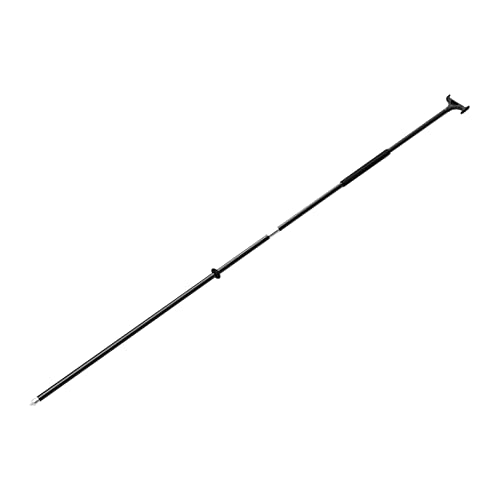
Ergonomic foam-lined handle with an integrated hook provides a comfortable grip and can be used as a push pole. A rubber ring on the two-piece fiberglass shaft helps prevent rope slippage. The design emphasizes easy handling in shallow water environments. Best for: kayakers who want a straightforward, comfortable push pole with a simple anchoring mechanism. Caution: ensure the anchor point is accessible and avoid over-tightening the joints to prevent slippage.
Who it’s best for: paddlers who value an ergonomic grip and a straightforward, reliable shallow-water anchor. Why selected: proven comfort and a practical anti-slip feature.
Medonala Marine Shallow Water Anchor Pole
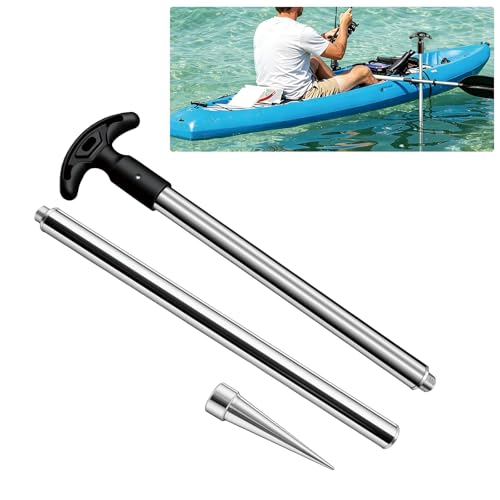
No More Drifting: A solid shaft bites into the bottom to resist wind, current, or wake. This 125″ x 0.74″ stainless shaft pairs with a robust T-handle to increase grip and ease of use. Best for: kayaks and small boats operating in saltwater or brackish flats where strong holding power is needed. Caution: stainless tips and hardware require maintenance to prevent corrosion in harsh environments.
Who it’s best for: users requiring heavy-duty anchoring in flats and saltwater. Why selected: long, sturdy shaft provides reliable hold and versatility across shallow water scenarios.
Buying Guide: Key Purchase Considerations
- Intended use: Choose a pole designed for shallow-water anchoring if you spend most time in lakes, rivers, or flats. If you need navigation aids, look for features like a built-in compass or T-handle with ergonomic grip.
- Length and storage: Longer poles offer deeper penetration but require more storage space. Two-piece designs improve portability and assembly speed.
- Materials and durability: Fiberglass with PA66 connectors offers a balance of strength and light weight. Stainless steel tips are rust-resistant but require maintenance in saltwater.
- Grip and ergonomics: Foam or rubber handles with integrated hooks improve comfort during extended use and make retrieval easier when needed.
- Maintenance and safety: Be mindful of sharp tips and exposed fiberglass. Wear gloves when cutting or handling to prevent splinters.
FAQ
- What is a push pole used for on a kayak?
It helps propelling or stabilizing a kayak in shallow water and can serve as a mooring anchor in certain conditions. - Which material is best for a kayak push pole?
A fiberglass-reinforced design with a stainless steel tip offers a good balance of strength, weight, and corrosion resistance. - Is a two-piece design easier to transport?
Yes, two-piece poles disassemble for compact storage and transport, which is ideal for kayakers with limited space. - Can I use a push pole as a primary anchor?
Some poles function as shallow-water anchors, but verify bottom type and depth before relying on it as a primary anchor. - Do I need to wear gloves when handling these poles?
Yes, especially when cutting or handling fiberglass sections to avoid skin irritation from fibers. - Are these poles suitable for saltwater use?
Many models feature stainless steel tips and corrosion-resistant materials, but regular maintenance is recommended in saltwater environments.