When water starts to accumulate, a reliable portable bilge pump is essential. This guide highlights five compact, easy-to-use options ideal for boats, kayaks, and dinghies, plus a few versatile picks for emergency water removal. Each product is chosen for portability, flow rate, and practical design. Best for small boats, kayaks, or squeeze-in bilge tasks; better for larger vessels or frequent use; choose this if you need battery-powered or inline transfer capability.
| Product | Why It Stands Out |
|---|---|
| Better Boat Manual Bilge Pump (20 GPM) | Best for lightweight, no-power emergencies and quick, direct water removal on small craft. |
| Attwood WaterBuster Portable Pump | Best for cordless, battery-powered use away from a power source. |
| Sutekus 12V Submersible Pump | Best for compact, 12V operation with decent lift and reliable performance. |
| Sanuke 1100GPH Bilge Pump Kit | Best all-in-one kit with hose, fittings, and clamps for easy installation. |
| SEAFLO 2000 GPH Bilge Pump | Best high-flow option for larger bilges or more demanding conditions. |
Better Boat Manual Bilge Pump With 39″ Hose
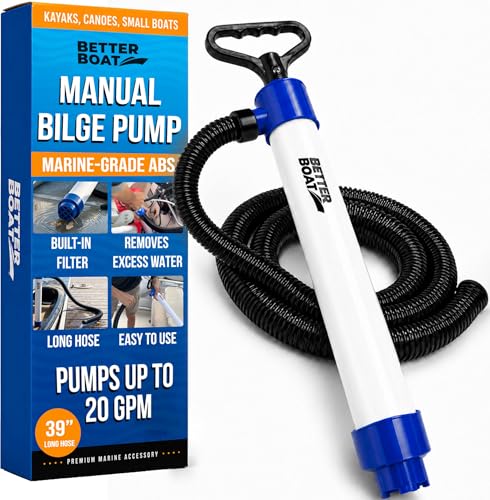
This hand-operated bilge pump delivers up to 20 gallons per minute with each stroke. Its 39-inch hose lets you direct water over the gunwale or into a bucket, reducing splashback. The built-in filter and suction spacers help prevent debris from clogging the intake, preserving prime even in dirty water. Best for solo sailors, kayakers, or emergency bilge removal when power isn’t available. Caution: Manual effort required; performance depends on stroke rhythm and water depth.
Attwood WaterBuster Portable Pump
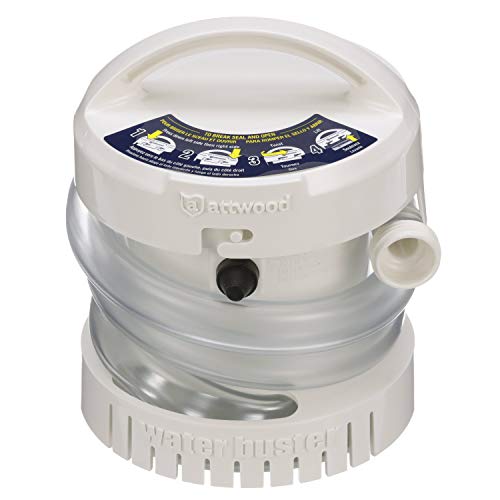
Battery-powered and cord-free, the Attwood WaterBuster is designed for portability and flexibility. It operates without a power source and can run for up to five hours on three D-cell batteries. This makes it a solid choice for boats where access to shore power is limited. Best for: small vessels, emergency pump-offs, and locations without a convenient power outlet. Limitation: battery life depends on battery quality and usage pattern.
Sutekus 12V Submersible Pump

This compact 12V submersible pump delivers up to 70 L/min (roughly 18-19 GPH) with a 10-foot lift capacity and 6.5-foot maximum water depth compatibility. It’s designed for marine use and includes protective measures for wet environments, though users should ensure a fully waterproof connection when immersed. Best for: small to mid-sized bilges and easy installation on compact boats. Caution: electrical connections require proper waterproofing to prevent corrosion.
Sanuke 1100GPH Bilge Pump Kit

This all-in-one kit includes a 1100 GPH bilge pump, a 6-foot kink-free hose, a 1-1/8″ ABS thru-hull fitting, and two stainless steel clamps. It features a long-life motor and an easy-clean snap-lock strainer to prevent debris buildup. Best for: mid-sized boats and DIY bilge installations. Limitation: higher flow means more power usage and potential hose wear if not properly routed.
SEAFLO 2000 GPH Bilge Pump

High-flow, 2000 GPH bilge pump with a 1-1/8″ outlet and a 12V power supply. It features a robust 4-year warranty and is suitable for larger bilges or boats prone to heavier water intrusion. Best for: larger boats or boats with frequent water ingress. Caution: higher amperage draw means more voltage stability is important to avoid tripping breakers.
Buying Guide
What type of bilge pump should I choose?
Manual pumps are simple and reliable when power isn’t available, ideal for small boats or emergency use. Submersible electric pumps are convenient for regular bilge maintenance, while inline or transfer pumps suit tasks that require moving water from one location to another quickly.
How important is flow rate?
Flow rate determines how fast water is removed. For small boats or kayaks, 20–25 GPM is often enough. For larger bilges, 1000–2000 GPH options are more effective, but they require more power and careful wiring.
What about installation and portability?
Consider hose length, fittings, and whether the pump needs to be handheld, battery-powered, or wired to the boat’s power system. Kits with hoses and clamps simplify installation and enhance reliability under movement and saltwater exposure.
What safety and durability factors matter?
Look for pump housings designed for marine environments, built-in strainers to shield against debris, and corrosion-resistant materials. Electrical safety is crucial for 12V pumps; ensure secure, watertight connections and proper mounting.
Maintenance considerations
Regularly inspect hoses, clamps, and seals for wear, clean filters to prevent clogs, and test pumps in dry runs to ensure prime and functioning before a trip.
Summary of top picks
- Best for manual reliability: Better Boat Manual Bilge Pump (39″ hose).
- Best cordless option: Attwood WaterBuster Portable Pump.
- Best compact 12V option: Sutekus 12V Submersible Pump.
- Best all-in-one kit: Sanuke 1100GPH Bilge Pump Kit.
- Best high-flow for larger boats: SEAFLO 2000 GPH Bilge Pump.
FAQ
- How do I choose between 20 GPM and 2000 GPH?
– Choose 20 GPM for small boats or emergency needs with no power. Choose 2000 GPH for larger bilges or frequent water ingress. - Are battery-powered bilge pumps reliable?
– They are convenient away from outlets and work well for quick jobs, but monitor battery life and carry spare cells for extended use. - Can these pumps handle dirty water?
– Many include built-in filters; ensure the intake is protected and clean the filter to prevent clogging. - What maintenance is required?
– Clean filters, check hoses and clamps, inspect wiring, and test function periodically before trips. - Is an inline kit better than a submersible pump?
– Inline kits are good for forced transfer and tight spaces; submersibles excel for direct bilge removal in wet areas.