When selecting a marine water pressure pump, the goal is reliable flow, stable pressure, and quiet operation that fits your vessel or RV setup. This guide highlights five pumps well-suited for boats, yachts, and off-grid or RV applications. Each choice targets specific needs: higher flow for showers and sinks, 12V DC options for battery-powered systems, or 110V AC where a shore power supply is available. Below you’ll find who each pump is best for, why it’s chosen, and practical considerations to help you decide.
Summary of selected products:
| Product | Voltage / Type | Flow | Best For |
|---|---|---|---|
| ECO-WORTHY 33-Series Industrial Water Pressure Pump | 110V AC | 4.0 GPM | Boat kitchens and larger RV setups on shore power |
| WASSERMANN RV Pump | 12V DC | 4.0 GPM | Off-grid RVs and boats with battery power |
| SEAFLO 33 Series 110V/115V | 115V | 3.3 GPM | RV, caravan, marine use on shore power |
| SEAFLO 55 Series 12V RV Pump | 12V DC | 5.5 GPM | High-demand fresh water on boats and cabins |
| TDR Venus 12V RV Water Pressure Booster | 12V DC | 4.0 GPM | Compact setups needing reliable boost |
ECO-WORTHY 33-Series Industrial Water Pressure Pump
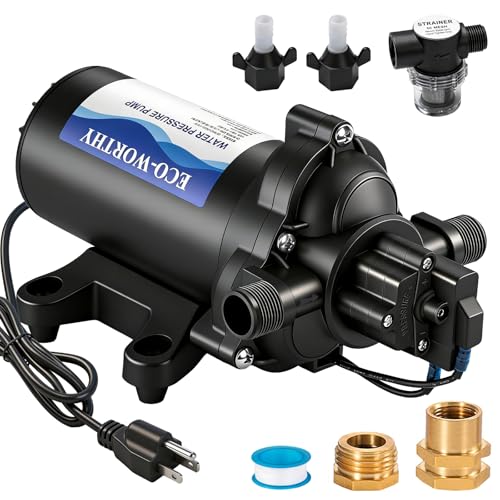
Voltage: 110V AC. Open flow: 4.0 GPM with a 50 PSI default, adjustable between 45-70 PSI. Self-priming up to 9.8 vertical feet and lift up to 148 feet. Features a smart pressure switch that starts and stops with faucet use. It includes thermal overload protection for motor safety and runs on AC power, eliminating the need for a marine battery in shore-connected systems.
Best for: Boat galley and larger RV water systems that have reliable shore power. It’s also a good pick when a quiet, auto-adjusting supply is required for multiple outlets.
Why chosen: Provides consistent flow with a simple on/off cycle connected to faucet demand, and adjustable PSI supports different fixtures without manual pressure changes.
Caution: Not ideal for battery-powered setups or where no AC power is available.
WASSERMANN RV Pump, 12V Self-priming

Voltage: 12V DC. Delivers up to 4 GPM with a steady 45 PSI, designed as a complete kit with hose adapters, debris filter, and user manual. It is suitable for powering RV showers, sinks, and water systems on boats when connected to a battery or a vehicle’s 12V supply.
Best for: RVs and boats requiring a full kit and flexible 12V operation for on-the-go use.
Why chosen: The kit approach minimizes extra purchases, and the 12V DC operation aligns with mobile power setups.
Caution: Installation may require additional battery capacity or power management for continuous use.
SEAFLO 33 Series 110V/115V Fresh Water Pump

Voltage: 115V. Flow: 3.3 GPM with a 45 PSI shut-off and automatic smart pressure switch. Self-priming up to 6 ft. This pump is NSF/UL listed and backed by a 4-year warranty, designed for RVs, caravans, boats, and off-grid use. It’s a compact option with robust compliance standards for potable water safety.
Best for: RVs or boats needing a compliant, compact, high-reliability 110V/115V option on shore power.
Why chosen: Strong balance of flow and pressure with long warranty and potable water safety certifications.
Caution: Priming lift is modest; consider storage tank height and line elevation when planning layout.
SEAFLO 55 Series 12V RV Water Pump

Voltage: 12V DC. Flow: 5.5 GPM with a 60 PSI shut-off. 9 ft suction lift and 4-year warranty. Built to NSF/UL standards for RV potable water, with EPDM valves and a Santoprene diaphragm, designed for reliable daily use in demanding freshwater systems.
Best for: High-demand water systems on boats or RVs that need a robust, steady flow for multiple fixtures.
Why chosen: Higher flow rate supports simultaneous use without significant pressure drop, while the warranty adds long-term reliability.
Caution: Higher current draw (up to 17A) means require adequate wiring and fuse protection.
TDR Venus 12V RV Water Pressure Booster

Voltage: 12V DC. 4 GPM with a maximum boost of 45 PSI. Self-priming and compact, suitable for kitchen, bathroom, garden, and marine applications. Includes a 50-mesh inlet strainer to help protect the diaphragm pump from debris. Designed for fresh water systems only.
Best for: Small to mid-sized marine or RV installations needing reliable pressurization with a compact footprint.
Why chosen: Compact form factor and adequate pressure make it a versatile booster for limited spaces.
Caution: Use only with fresh water; avoid mixing with saltwater or contaminated sources to protect the diaphragm.
Buying Guide: Key Purchase Considerations
- Power source: Choose 110V AC pumps for shore power and 12V DC pumps for battery-powered setups. Mixing both can complicate wiring and power management.
- Flow and pressure needs: Larger RVs or boats with multiple fixtures benefit from higher GPM and PSI—plan around peak water use scenarios (shower, sink, galley).
- Self-priming capability: Ensure the pump can lift water from your storage tank to the fixtures; higher lift helps with lay-flat installations and higher mounting positions.
- Materials and safety: Look for EPDM/Santoprene diaphragms and NSF/UL certifications for potable water systems to ensure safety and durability.
- Noise and space: Diaphragm pumps are generally quieter than diaphragm types in some configurations, but installation location affects perceived noise. Consider mounting and vibration dampening.
- Protection features: Thermal overload protection and optional bypass modes reduce wear and extend life in continuous use scenarios.
- Maintenance: Debris filters and strainers help protect the pump. Check whether the kit includes necessary adapters for your hose connections.
FAQ
- What is the typical life span of a marine water pump? – Lifespans vary, but with proper maintenance, a diaphragm pump can last several years in marine or RV environments.
- Do I need a separate battery for 12V pumps? – Yes, 12V pumps require a battery or vehicle power source; ensure appropriate gauge wiring and fusing.
- Is 50 PSI enough for multiple fixtures? – It depends on line length and fixtures; for many setups, 50 PSI is sufficient, but adjustable models help tailor pressure.
- What should I do if the pump cycles on and off quickly? – Check for air leaks, prime the pump, and confirm that the pressure switch is set correctly for your fixtures.
- Can I use these pumps in saltwater environments? – Some pumps are suitable for freshwater only; avoid saltwater exposure unless specified for marine potable water systems.
- Is NSF certification necessary? – For drinking water systems, NSF/UL compliance helps ensure safety and compatibility with potable water standards.