Whether you’re sailing at dusk, fishing before dawn, or navigating foggy coastal waterways, the right marine night vision binoculars can extend your visibility and safety. This guide highlights five capable options best suited for different buyers—sea-waring enthusiasts, professional mariners, casual boaters, and wildlife observers—so you can choose confidently. Below you’ll find concise comparisons, target-use notes, and a practical buying guide to help you decide.
| Product | |
|---|---|
| USCAMEL 10X50 Marine Binoculars | Mariners needing built-in compass and rangefinder for quick distance estimates |
| TELUHA 4K Night Vision Goggles | Hunters, wildlife observers, and security-focused users needing 4K recording |
| Steiner Marine Binoculars 7×50 | Active outdoor users seeking high-contrast optics and floatable design |
| Bushnell Marine 7×50 Binocular | Budget-conscious mariners requiring built-in compass and rugged build |
| SELFIE CAT 10×50 Marine Binoculars | Water sports enthusiasts needing rangefinder and compass with a rugged kit |
USCAMEL 10X50 Marine Binoculars for Adults with Rangefinder Compass
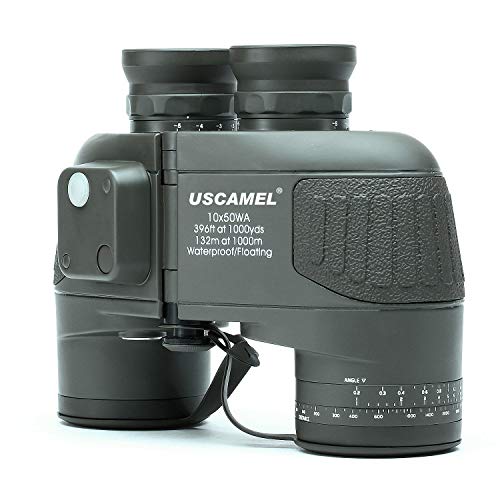
The USCAMEL marine binoculars pair 10x magnification with a 50 mm objective lens, delivering a bright, detailed image suitable for deck-level scanning and long-distance identification. A built-in illuminated compass on the left eyepiece supports navigation, and an internal rangefinder helps you estimate distance and object size directly in view. These binoculars suit boaters who need quick orientation and distance cues while sailing or fishing, especially in low-light conditions. Best for: adult mariners who value integrated navigation aids and a robust, glasses-friendly design.
Limitations to note: while the kit includes LR936/AG9 batteries for the compass illumination, long exposure use in heavy seas can affect diopter stability; ensure proper calibration when switching between users or changing viewing distances.
TELUHA Night Vision Goggles for Adults, 4K Night Vision Binoculars

TELUHA’s 4K night vision binoculars focus on high-detail capture and recording. They offer a 3-inch display, 5x digital zoom, and a sizable 5000mAh rechargeable battery, paired with a 32GB TF card for storing videos and photos. This option is ideal for wildlife observation or security monitoring at night where video documentation matters more than field-of-view. Best for: night researchers or security-minded users who prioritize daytime-like clarity and onboard recording. One limitation: the dedicated night-vision headset form factor can be heavier to wear for extended periods.
Steiner Marine Binoculars for Adults and Kids, 7×50

Steiner’s 7×50 marine binoculars offer high-contrast optics with true-to-life color, a 50 mm objective diameter, and a 356 ft field of view at 1000 yards. The SPORTs Auto Focus feature ensures consistent sharpness with minimal refocusing across the viewing distance. A floating prism system helps absorb shocks, making them robust for active marine use. Best for: mariners and outdoor lovers who demand bright, steady optics with reliable focus. Caution: heavier build may be less comfortable for prolonged handheld use during long voyages.
Bushnell Marine 7×50 Binocular

Bushnell’s 7×50 marine binoculars focus on a rugged, fully multi-coated optical path with a built-in compass and rangefinder. They are designed for reliable performance in saltwater environments and feature nitrogen-purged fog resistance to keep views clear. Best for: boaters who value a straightforward, durable option with navigational aids. Limitation: some users may prefer a brighter edge-to-edge performance in very low light as compared to premium brands.
SELFIE CAT 10 x 50 Marine Binoculars

SELFIE CAT combines 10x magnification with wide 50 mm objective lenses and a Bak4 prism system for bright, crisp views. It features an internal rangefinder scale and a built-in compass for orientation, making it a practical choice for navigational tasks on the water. Best for: water sports enthusiasts and sailors who want precise range and bearing data with a reliable build. Caution: higher magnification means a steadier hand is needed for shake-free viewing, and tripod use may improve stability in rough seas.
Buying Guide: Key Factors To Consider
- Magnification and objective size: Higher magnification (e.g., 10x) provides more detail but demands steadier hands or a tripod. Large objective lenses (50 mm) boost light gathering for night or dawn conditions but can reduce portability.
- Night visibility features: Look for models with built-in illumination, low-light coatings, and BAK4 prisms for color accuracy and brightness. Some options include rangefinders and compasses to aid navigation.
- Waterproof and fog-proof: Marine use requires waterproof seals and nitrogen-purging to prevent internal fogging in humid or spray-prone environments.
- Ergonomics and eyeglass compatibility: Foldable eyecups and diopter adjustments improve comfort for glasses wearers and allow precise focus.
- Weight and balance: Heavier binoculars can reduce handheld stability over long sessions; consider models designed for marine handling and possible strap attachment.
- Recording capabilities: If night surveillance or wildlife monitoring is needed, some models offer 4K video recording and larger internal storage.
Frequently Asked Questions
- What makes marine night vision binoculars different from regular binoculars?
They include features like enhanced low-light performance, waterproofing, fog resistance, and often navigational aids (compass, rangefinder) for marine use. - Is higher magnification always better for night viewing on a boat?
Higher magnification provides more detail but requires steadier handling and can reduce field of view; for moving vessels, 7x to 10x is common. - Are rangefinders accurate enough for nautical distances?
Rangefinder accuracy varies by model; designed to assist distance estimation rather than precise surveying, especially in rolling seas. - Should I prioritize built-in compass or magnification?
If navigation is a key need, prioritize a model with a compass and rangefinder; otherwise, magnification and image quality may be more important. - What maintenance is required for marine binoculars?
Rinse with fresh water after saltwater exposure, dry thoroughly, and store in a protective case to prevent corrosion and dust ingress. - Can these binoculars be used with glasses?
Many marine models offer foldable eyecups and adjustable diopters to accommodate glasses wearers for comfortable viewing.