Answer: A marine fuse block with switches is designed to organize power distribution on boats, RVs, and other vehicles while protecting circuits with fuses. This guide highlights five top options to match common needs—from compact 4- and 5-gang panels with USB charging to larger 6- and 12-circuit blocks with built-in voltmeters and protective features. Ideal buyers include boaters seeking weatherproof control, RV owners needing reliable accessory power, and off-road enthusiasts who require durable, accessible switching along with circuit protection.
| Product | Gangs / Features | Best For |
|---|---|---|
| Nilight 5 Gang Multi Function Waterproof Switch Panel | 5 switches, USB, PD Type-C, voltmeter, inline 15A fuse | RVs, boats, trucks needing integrated charging and monitoring |
| FXC Waterproof Marine Boat Blue 4 Gang Panel | 4 switches, QC3.0 USB, Type-C, voltmeter, circuit breakers | Vehicles demanding USB charging and multiple protections |
| Blue Sea Systems ST Blade 6 Circuit Fuse Block | 6 fused circuits, negative bus, protective cover | Higher-demand DC systems with organized circuits |
| Upgrade Blue 5 Gang Marine Boat Panel | 5-gang, dual USB, voltmeter, DIY stickers | Customizable panels for boats and RVs |
| SeaSense 6 Gang Switch Panel | Illuminated switches, pop-out fuse holders, corrosion-free panel | Accessible control with easy fuse access |
Nilight 5 Gang Multi Function Waterproof Switch Panel

This 5-gang panel combines five waterproof rocker switches with a cigarette socket, a PD Type-C/ USB charger, and a LED voltmeter. It supports 12V/24V systems and includes a pre-wired 15A inline fuse for overload, over-current, and short-circuit protection. It is best for boaters or RV owners who want a compact, all-in-one control center with real-time voltage monitoring. A potential limitation is that a single inline fuse protects the main circuit; users should manage wiring carefully to avoid overloading individual accessories.
FXC Waterproof Marine Boat Blue 4 Gang Panel

This 4-gang blue LED panel adds a voltmeter and dual USB ports (QC3.0 and Type-C), plus circuit breakers giving separate protection for each switch. It suits users who want clear voltage status and strong protection while having USB charging ready for devices. It is better for smaller setups where space is at a premium and straightforward, per-switch protection is valued. A caution: the panel’s protection is more robust for individual switches rather than a single shared main fuse for the whole panel.
Blue Sea Systems ST Blade Fuse Block 12 Circuit

This 12-circuit Blade fuse block includes a negative bus and a protective cover, offering a high-capacity solution for more extensive DC systems. With integrated labeling areas, it’s ideal for complex electrical layouts where organization and quick fault identification matter. It’s best for larger boats or RVs that require multiple controlled circuits and robust protection, but it may be bulkier and require more wiring space than smaller panels.
Marine Switch Panel Waterproof 8 Gang by xhtechnology
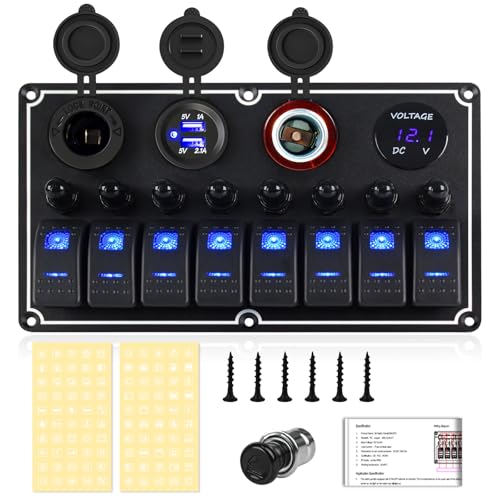
This 8-gang marine switch panel provides dual USB ports and a voltmeter, plus two blue LED-lit switches. It emphasizes waterproof construction and a DIY sticker set for labeling. It is best for boaters who need more control points with visible status in low-light conditions, but the higher gang count may demand more panel space and more complex wiring.
FXC Pre-Wired 5 Gang Panel With 40A Inline Fuse

This 5-gang aluminum panel uses a 40A inline fuse with blue LED illumination and a 12V/24V rating. It’s ideal for marine, automotive, and RV applications needing a durable, pre-wired solution with clear fuse protection for each circuit. Choose this if you want a robust, ready-to-install panel with strong inline-fuse safety, but note the 40A rating applies to the overall wired setup and may limit high-draw accessories on a single circuit.
Buying Guide: Key Considerations
- Electrical system compatibility: Ensure the panel supports your voltage (12V or 24V) and can handle your total amperage needs without overloading any circuit.
- Number of circuits: Match the number of gangs to your planned accessory layout, with room for future expansion.
- Protection and safety: Look for inline fuses or circuit breakers for each circuit, and consider negative bus or ground protection when selecting multi-circuit blocks.
- Waterproofing and environment: For boats and outdoor RVs, choose marine-grade construction with splash-proof panels and water-resistant caps.
- Monitoring features: Voltmeters, LEDs, and digital displays help maintain battery health and spot issues early.
- USB charging and outlets: If device charging is important, prefer panels with USB ports (QC 3.0, Type-C) and cigarette-lighter sockets for flexibility.
- Ease of installation: Pre-wired designs, clear wiring instructions, and mounting hardware simplify DIY setups.
- Durability and materials: Aluminum panels offer strength and corrosion resistance; robust switches minimize wear in rough conditions.
Frequently Asked Questions
- What is a fuse block in marine electrical systems?
– A fuse block distributes power to multiple circuits while providing protection through fuses or breakers, helping prevent damage from overloads. - Should every switch have its own fuse?
– It’s beneficial for individual protection, but some panels use a main fuse for the entire circuit. Consider your wiring plan and total load. - Is a voltmeter necessary on a switch panel?
– A voltmeter helps monitor battery health and can prevent unexpected power loss, especially on boats and RVs. - What materials are best for marine environments?
– Look for corrosion-resistant metals (like aluminum), splash-proof designs, and sealed caps to withstand moisture. - Can I upgrade an existing panel with USB or LED voltmeters?
– Yes, many panels support upgrades via add-ons or compatible modules; verify compatibility with your electrical system. - What’s the difference between inline fuses and circuit breakers?
– Inline fuses protect a single circuit as a simple, replaceable option, while circuit breakers can trip repeatedly and reset after a fault.