Answering the common buyer question, these lift-assist kayak carriers help you load and secure watercraft without heavy lifting. They’re ideal for solo users, people with limited mobility, and anyone seeking a faster, safer loading process. Below are five top options that balance load capacity, ease of use, and durability for American road trips and weekend paddling.
| Product | Best For | Key Benefit |
|---|---|---|
| TOOENJOY Heavy-Duty Lift Assist Roof Rack (First Model) | Solos or small crews | 100 lbs capacity with Smart-Lift Mechanism |
| TOOENJOY Heavy-Duty Lift Assist Roof Rack (Second Model) | Extended crossbar setups | Same 100 lbs capacity with crossbar compatibility note |
| Thule Hullavator Pro kayak roof rack mount NEW | Waist-height loading with gas-assist | 40 lb lift-assist per kayak |
| Malone Telos XL Load Assist | Compact storage and modular loading | Attachable Load Assist Module for tall loads |
| Malone SeaWing/Stinger Combo | One-kayak setups with reliability | Saddle + Stinger for stable loading |
TOOENJOY Heavy-Duty Lift Assist Roof Rack (First Model)
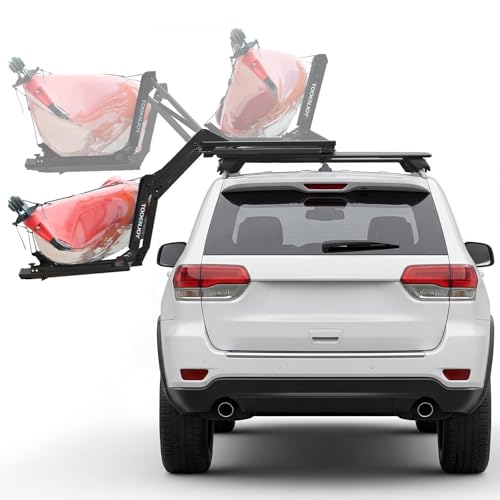
Product overview: This lift-assist system supports loads up to 100 lbs and uses a Smart-Lift Mechanism to raise and lower kayaks, canoes, and other gear. It’s aimed at solo paddlers and small teams who want back-friendly loading. Best for extended crossbar setups that support adjustable spacing around 29.76 inches. It’s important to verify crossbar compatibility before purchasing, and consider purchasing the accessory adapter if crossbars are fixed or non-extendable. A strong locking system adds cargo security for highway travel.
Best for: Solo or small crews needing a single-rack solution with powered lifting. Limitations: Requires compatible, adjustable crossbars or the accessory adapter for fixed rails. If you already own fixed crossbars, this may require extra hardware.
TOOENJOY Heavy-Duty Lift Assist Roof Rack (Second Model)

Product overview: Similar to the first model, this variant emphasizes a robust 100 lbs capacity and an elevating mechanism designed to reduce lifting strain. It reinforces compatibility notes for crossbars and suggests the Accessory Adapter for fixed rails. The system is described as capable of handling kayaks, canoes, bikes, SUPs, and more, which broadens its utility for multi-gear loading.
Best for: Users who want consistent lift-assisted loading with wide crossbar compatibility. Limitation: As with other lift racks, improper crossbar setup may reduce load stability; ensure correct installation.
Thule Hullavator Pro kayak roof rack mount

Product overview: The Hullavator Pro uses gas-assisted struts to lift about 40 lbs of a kayak’s weight, enabling waist-high loading. It features double extending arms that lower the kayak up to three feet for safer handling and secure 8-point contact padding to protect the hull. This makes it a strong choice for lighter kayaks or frequent solo loading that prioritizes ergonomic loading.
Best for: Users needing waist-height loading and reliable protection for lighter watercraft. Limitation: Higher-end feature set may be costlier and primarily benefits lighter kayaks; ensure your kayak weight aligns with the lift capacity.
Thule Hullavator Pro Kayak Rack
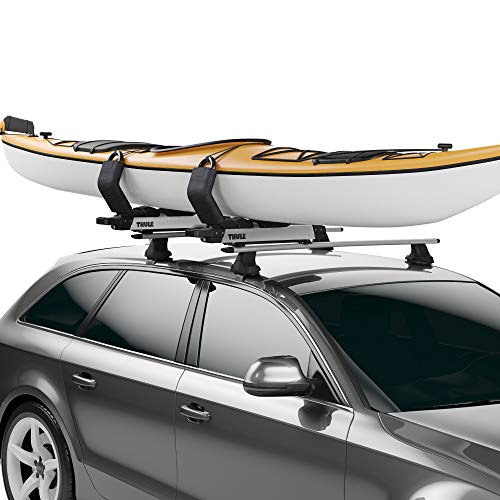
Product overview: This model emphasizes lift-assist features that facilitate solo loading, with 40 lbs of lift per kayak provided by gas-assisted struts. The design enables waist-height loading and unloading, aided by double extending arms for stable handling. The emphasis is on ease of use and consistent performance for a single kayak load.
Best for: Solo paddlers prioritizing ergonomic loading. Caution: The system is designed for specific vehicle racks; verify compatibility with your roof rack setup to avoid fit issues.
Apaspoil Kayak Roller Loader
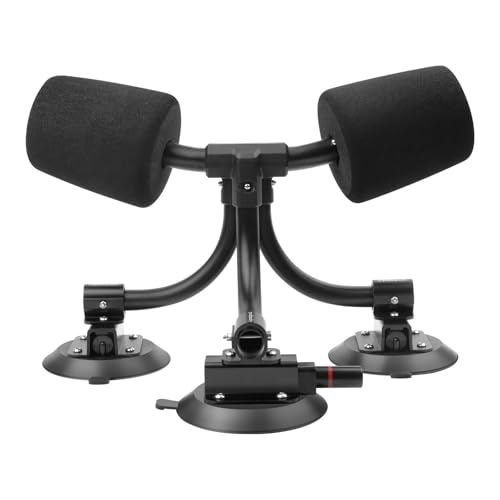
Product overview: The Apaspoil loader uses a heavy-duty suction cup tripod base for stability and a V-style design to accommodate wide kayaks. It supports up to 280 lbs and emphasizes a stable, no-drill mounting approach. The design includes foam barrels for smooth rolling and reduced hull contact, aiding loading on varied roof styles.
Best for: Those loading wider or heavier kayaks who want a suction-cup mounting option. Limitation: Suction-based mounts require clean, smooth roof surfaces and may vary with window shapes; ensure compatibility with your vehicle’s rear window or roof profile.
Malone Telos XL Load Assist

Product overview: The Telos XL Load Assist Module attaches to J- and V-style carriers to provide a safe vertical lift for kayak loading. It introduces ground-level adjustable extensions to prevent vehicle contact damage and collapses for trunk storage, offering portability and convenience for frequent travelers.
Best for: Users who want a modular, stowable load-assist option compatible with multiple carrier styles. Limitation: May require compatible Malone or third-party carrier bases; verify compatibility before purchase.
Malone SeaWing/Stinger Combo Saddle Style
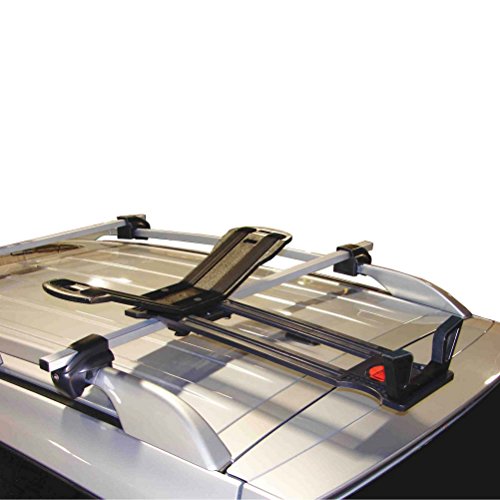
Product overview: This combo uses Sea Wing saddles with a Stinger self-aligning V-Block system for easier kayak loading. It supports up to a maximum 75 lbs per kayak and offers corrosion-resistant saddles for longer life. The design focuses on easy, guided placement to minimize handling effort.
Best for: Those loading a single kayak up to 75 lbs who want a simple, reliable saddle-based carrier. Caution: Heavier boats near the top weight limit may require additional stabilization or a secondary approach on taller racks.
Buying Guide: Lift-Assist Kayak Carrier Considerations
Crossbar compatibility: Most lift racks require adjustable crossbars or specific adapters. Verify spread and bar type (round, square, fixed) before buying. If your current crossbars are non-extendable, consider models that offer an Accessory Adapter or compatible add-ons.
Weight capacity and kayak weight: Choose a model that comfortably exceeds your kayak’s weight plus gear. If you paddle larger, heavier boats, prioritize higher load capacity or a modular system that allows additive support.
Loading height and ergonomics: Gas-assisted or electric lift systems reduce back strain. Waist-height loading is a key benefit for solo users; consider how tall your vehicle roof is and whether you’ll need tilt or rotate features to align paddles and hulls safely.
Vehicle compatibility: The roof rack system must align with your vehicle type (SUV, sedan, van). Check vehicle-mounted rails, rail spread, and door frame clearances. Some suction-based mounts may require a smooth roof surface for best grip.
Durability and weather resistance: Look for corrosion-resistant materials and secure locking mechanisms. If you travel year-round in varied climates, choose powder-coated or stainless components that resist rust and UV exposure.
Installation and maintenance: Some lift racks require more complex installation or periodic lubrication of moving parts. Review manuals or product pages for maintenance steps to maximize lifetime performance.
FAQ
- What is a lift-assist kayak carrier? A rack system that uses mechanical, gas, or hydraulic assistance to raise and lower a kayak onto a vehicle roof, reducing manual lifting.
- What should I check before buying? Verify crossbar compatibility, weight capacity, and whether the carrier supports your kayak width and hull shape.
- Can I install these on any vehicle? Most roofs with crossbars can accommodate lift racks, but verify rail type, spread, and clearance for your specific vehicle.
- Is a higher weight capacity always better? Yes, if you have larger or heavier kayaks, but ensure the entire roof system can support the weight without compromising handling.
- Do lift racks work for multiple gear types? Many models are designed to handle canoes, bikes, and SUPs in addition to kayaks, but confirm supported gear in the product specs.
- Are suction-cup mounts reliable? Suction mounts can work well on smooth roof surfaces, but their effectiveness varies with window shape and surface cleanliness. Follow installation guidelines carefully.