Finding the right life jacket for a child around 23 pounds is about secure floatation, comfortable fit, and quick access in emergencies. The top options below are US Coast Guard approved and designed for infants or toddlers weighing up to 30 pounds. This guide highlights which jacket is best for newborns and small toddlers, plus practical notes on fit, materials, and safety features for every scenario.
Buyer type snapshot: ideal for parents taking infants on boats, pool days, or lake trips; for caregivers seeking quick-rescue handles, head support, and a snug, secure fit. The table below compares key picks to help decide at a glance.
| Product | Designed For | Best For | Why It Stands Out |
|---|---|---|---|
| Airhead Infant General All Purpose Life Jacket | Infants under 30 lbs | Calm-water boating with headrest | Three belts, crotch strap, and bright colors for visibility |
| Stohlquist Child Life Jacket | Infants 20–30 lbs | Head support and secure, snug fit | Ergonomic headrest and adjustable panels |
| Dark Lightning Coast Guard Toddler Life Jacket | Infants under 30 lbs | Soft, lightweight daily use | Headrest, leg strap, grab handle for control |
| AIRHEAD GNAR Kwik-Dry Neolite | Infants and children | Active water play | Quick-dry, soft fabric, secure closures |
| Oceans7 Infant-Child-Youth Life Jacket Vest | 8–30 lbs | Flexible sizing for small kids | Open-side design with 3 straps and chest adjustments |
Airhead Infant General All Purpose Life Jacket for Infants Under 30lbs

Best for: infants up to 30 pounds who spend time near calm waters. The jacket uses a closed-sided design with three buckles and a crotch strap to keep the vest from riding up. A headrest provides extra buoyancy for young heads, and the bright color improves visibility on the water.
Why chosen: US Coast Guard Type II standard, quick-response design, and durable 200D polyester shell offer a balance of safety and comfort for family boating. The rescue handle adds peace of mind for caregivers.
Caution: Fit must be snug; looseness can lead to improper flotation. Check that all straps are fastened securely before water activity.
Oceans 7 US Coast Guard Approved, Infant-Child-Youth Life Jacket Vest
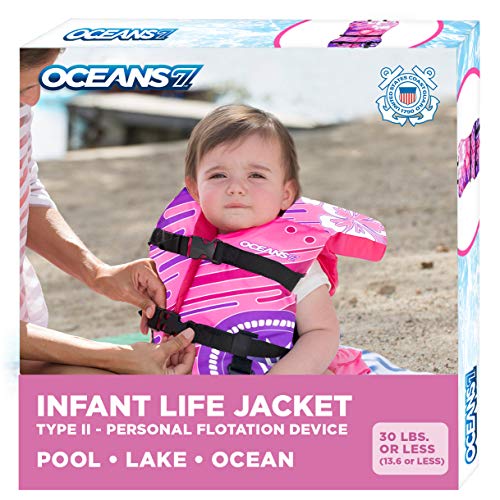
Best for: infants and toddlers near the 8–30 pound range who need a flexible fit. This vest follows USCG guidelines and uses an open-side design with adjustable straps for a customizable fit.
Why chosen: Designed to accommodate growth from infant to child, making it convenient for households with evolving sizing needs. Comfort and secure closure promote continued use during multiple water outings.
Caution: Sizing accuracy depends on weight; if the child weighs more than 25 pounds, consider the child-size option for a better fit.
Stohlquist Child Life Jacket, Type II Infant PFD

Best for: infants and toddlers in the 20–30 pound range who need robust neck support. The jacket emphasizes a face-up position with an ergonomic headrest and sculpted foam to reduce chafing.
Why chosen: US Coast Guard approval and long-standing safety reputation make it a reliable option for families seeking predictable flotation and secure adjustment. The headrest adds confidence for uncertain water conditions.
Caution: The vest may feel bulky to very active children; ensure full mobility is possible in water activities.
Dark Lightning Coast Guard Approved Toddler Life Jacket

Best for: infants under 30 pounds who need a snug, secure fit with quick control features. Includes a headrest, leg strap, and a grab handle for better handling near water.
Why chosen: USCG approval and a low-profile design facilitate easier movement during water play. The leg strap helps prevent the vest from riding up during splashes or paddling.
Caution: Material and fit should be checked regularly; ensure the leg strap remains snug to keep the vest in the correct position.
Oceans 7 US Coast Guard Approved Infant-Child-Youth Life Jacket Vest

Best for: families needing a flexible vest for 50–90 pound youth; for 23-pound infants, this could be a growth-fit option if used with proper size selection. Open-side design provides a comfortable range of motion.
Why chosen: A versatile sizing range and adjustable chest straps support longer use across growth stages, making it a value option for occasional boaters or lake outings.
Caution: If the weight is significantly under the listed range, verify the corresponding infant or child size for safety.
Buying Guide: Key Purchase Considerations
How to choose the right life jacket for a 23-pound child:
- Size and weight range: Look for infant or toddler PFDs labeled for 8–30 pounds or 20–30 pounds to ensure buoyancy without compromising head support.
- USCG approval: Always prefer Type II or Type III PFDs that meet US Coast Guard standards for infant and child safety.
- Fit features: Choose closed sides or open-sided designs based on activity level. A leg or crotch strap helps prevent riding up in the water.
- Head support: A built-in headrest improves stability and keeps the face above water, especially for very young swimmers.
- Materials and comfort: Quick-dry fabrics and soft, non-chafing inner linings reduce irritation during long days on the water.
- Adjustability: Three or more adjustable straps with a snug fit will adapt as your child grows and changes pose in water.
FAQ
- What size should I choose for a 23-pound infant?
Choose an infant or toddler PFD labeled 8–30 pounds or 20–30 pounds with secure straps and a headrest. - Is USCG approval necessary?
Yes. USCG approval ensures the jacket meets established safety standards for buoyancy and fit. - Open-sided vs closed-sided designs, which is better?
Open-sided vests offer greater mobility; closed-sided designs tend to stay more secure on very active kids. - Should I consider a growth-friendly option?
Yes. Some vests are designed to accommodate growth from infant to child, but ensure the weight range aligns with your child’s current weight. - What features improve safety on water days?
Look for a rescue handle, crotch strap, bright colors, and a properly sized headrest for better visibility and control. - How do I ensure a correct fit?
Fasten all straps snugly, check that the vest sits level on the chest, and perform a quick float test in shallow water with supervision.