When choosing a vinyl adhesive for marine use, you want a product that bonds securely to vinyl and PVC, holds up to moisture and salt, and remains flexible after curing. This guide highlights five reliable options suited for boat decks, pontoon vinyl flooring, tarps, and marine upholstery. Suitable buyers include boat owners, RV travelers, and marine maintenance crews seeking durable, water-resistant vinyl cement or adhesive.
Overview of the chosen products:
- RecPro RV Roll On Floor Adhesive — Marine-grade, water-based, 1 gallon. Best for RVs or boats needing a smooth, even floor bond with simple application.
- HH-66 Toluene Free Vinyl Cement 1 oz — Environmentally friendlier vinyl adhesive, water-friendly and flexible. Ideal for quick repairs and smaller areas.
- HH-66 Vinyl Cement 4 oz — Industrial-strength bond for PVC and vinyl repairs in various environments, including marine settings.
- Vinyl Cement by Bellisinno (4.4 oz) — Waterproof, versatile for PVC, ABS, EVA, and rubber surfaces. Good for inflatables and pool gear.
- Marine Adhesive for Boat Carpet & Pontoon Vinyl Flooring — 2 gallons total; water-based and designed for backing materials common in marine flooring.
RecPro RV Roll On Floor Adhesive Review

Brand: RecPro. This water-based adhesive penetrates plywood to create a secure bond for vinyl flooring. Best for RV and boat floor installations where a smooth, wrinkle-free finish is desired. It performs well within a working temperature range of 65–75°F. The product ships in a 1-gallon bucket, covering roughly 100 square feet when applied with a notched trowel. Cure time suggests a 24-hour wait before use for optimal results. A steel roller helps to eliminate air pockets for a professional look.
Who it’s best for: Roof-to-deck installers and DIYers seeking an easy, large-area bond for marine-grade flooring on boats or RVs. Why selected: strong bond, user-friendly application, and a visible finish with minimal wrinkles. Limitation: best applied in moderate temperatures; performance may vary at extreme heat or cold.
HH-66 Toluene Free Vinyl Cement 1 oz
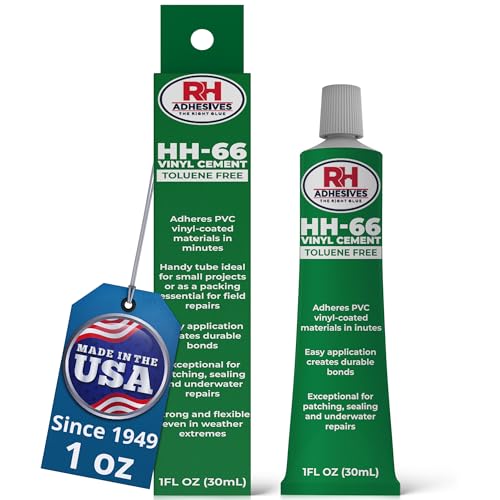
Brand: RH Adhesives. This toluene-free vinyl adhesive blends industrial strength with environmental safety. It bonds PVC and vinyl surfaces from 35°F to 95°F and can be applied underwater. Once cured, it remains flexible from -30°F to 150°F, reducing crack risk. The formula penetrates surfaces for a durable, flexible hold and is suitable for repairs, patches, decals, or molding applications on marine vinyl, tarps, pool liners, and inflatable items.
Best for: Small repairs or patch jobs where a strong, flexible bond is needed without hazardous solvents. Why selected: safe to use in more environmentally conscious settings and underwater-capable. Caution: 1 oz size is small; larger repairs may require multiple tubes or a different product for wide areas.
HH-66 Vinyl Cement 4 oz

Brand: RH Adhesives. This 4 oz vinyl cement delivers an industrial-strength bond for PVC and vinyl surfaces. It remains flexible after curing and can endure a broad temperature range. It’s suitable for permanent repairs, patches, decals, and molding, touching a variety of materials beyond vinyl, including canvas and wood. It’s a practical choice for marine vinyl repairs on tarps, pool liners, inflatables, and more.
Best for: Medium-area repairs where a durable, flexible bond is required. Why selected: strong overall performance and versatility across surfaces. Limitation: larger jobs may require more product or supplemental adhesives for seam integrity.
Vinyl Cement By Bellisinno (4.4 oz)

Brand: Bellisinno. This vinyl cement claims strong adhesion for underwater or outdoor use, maintaining transparency and UV resistance to prevent yellowing. It’ s compatible with PVC, ABS, EVA, and rubber, enabling repairs on inflatable beds, pools, boats, canvas, kayaks, and more. The formulation emphasizes durability and resistance to salt and chemicals in marine environments.
Best for: Repairs across a broad range of vinyl materials in damp or exposed marine environments. Why selected: versatile surface compatibility and UV stability after curing. Caution: ensure the materials are clean and dry for optimal adhesion in outdoor conditions.
Marine Adhesive For Boat Carpet & Pontoon Vinyl Flooring

Brand: BoatCarpetCentral. Sold in 2-gallon pails, this water-based adhesive is designed for backing materials common in marine vinyl flooring. Each 1-gallon portion can cover up to about 8 by 10 feet per bucket, with a total coverage capable of handling larger deck areas and pontoons. Notable for its compatibility with rubber-backed flooring and its avoidance of deterioration in backing materials unlike some solvent-based glues.
Best for: Larger marine flooring projects on boats or pontoons where water-based formula and safe backing compatibility matter. Why selected: suitable for sizable installations and back-material-friendly performance. Limitation: overall coverage depends on application method; plan for multiple pails on larger decks.
J-B Weld MarineWeld Syringe
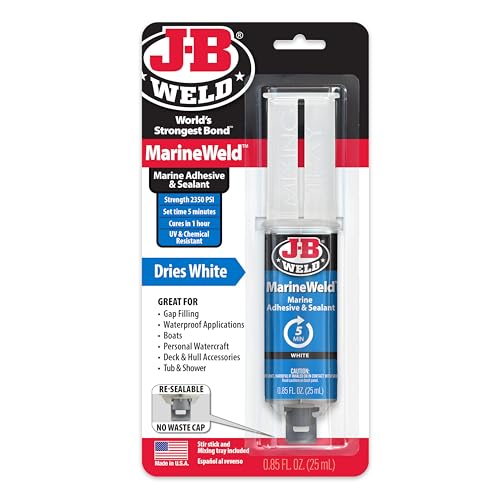
Brand: J-B Weld. MarineWeld is a two-part adhesive and sealant designed for a strong, flexible, and waterproof bond. The syringe format provides a straightforward 1:1 mix ratio for ease of use, especially in tight spaces on boats and yachts. The formulation emphasizes chemical and UV resistance suitable for marine applications.
Best for: Small to medium repairs where a precise, controlled bond is needed in tight areas. Why selected: convenient syringe packaging and a proven performance profile for marine vinyl and related materials. Caution: mixing and working time require careful handling in sun-exposed or warm environments to prevent premature curing.
Buying Guide: Key Considerations For Marine Vinyl Adhesives
What’s the right strength for your project? For large vinyl flooring or tarp applications, choose products that offer strong, flexible bonds and good initial tack. For repairs, consider flexible cements that resist cracking in temperature fluctuations.
Water resistance and underwater capability: If the marine environment involves constant exposure to water, look for adhesives labeled as waterproof or suitable for underwater use. This is crucial for boat decks and inflatables.
Surface compatibility: Marine vinyl products vary in what they bond to. If you’re working with PVC, vinyl-coated fabrics, fiberglass, or rubber-backed flooring, pick an adhesive with explicit surface compatibility.
Temperature range: Marine conditions can swing from cold to hot. A bond that remains flexible between -30°F and 150°F will better resist brittleness and cracking.
Application method and cure time: Larger jobs benefit from products with straightforward application (roll-on, trowel, or syringe). Consider cure times to coordinate with sailing or RV use, preferring options that allow reoccupation after a reasonable wait period.
Safety and environmental considerations: Toluene-free options reduce inhalation risk and environmental impact. For spaces with limited ventilation, consider safer formulations and low-odor adhesives.
Packaging and coverage: For big decks, flooring, or tarps, calculate area coverage per unit and select products with sufficient supply. Measure your project to avoid mid-project shortages.
Frequently Asked Questions
- Which adhesive is best for marine vinyl flooring? For large vinyl flooring in marine settings, water-based, flexible vinyl cements that bond to vinyl and withstand moisture and temperature changes are recommended. RecPro, and BoatCarpetCentral options are practical examples.
- Can vinyl glue be used underwater? Some formulations, including certain HH-66 variants, claim underwater applicability. Verify product-specific claims and ensure proper curing conditions for best results.
- Are solvent-based adhesives necessary for marine vinyl? Not always. Many marine vinyl projects benefit from water-based or petrochemical-free adhesives that offer flexibility and reduced odor, especially in enclosed spaces.
- How do I choose between a gel, cement, or syringe adhesive? For large surface areas or floors, a cement or roll-on adhesive provides even coverage. For tight seams or patches, a syringe-based adhesive like MarineWeld offers precise application.
- What preparation is needed before applying vinyl adhesive? Clean all surfaces, remove dust and oils, and ensure the area is dry. Follow curing times and temperature recommendations for best results.
- Can I use multiple products for a project? Yes, you can combine products for different tasks (e.g., patching with a syringe adhesive and bonding a larger area with a roll-on cement), as long as surfaces compatibility is maintained and cure times are respected.