When storing or maintaining fuel for boat use, choosing the right stabilizer matters. This guide highlights five reliable options that help prevent water buildup, varnish, and corrosion while supporting easier starts and cleaner fuel systems. Best for seasonal boat owners, long-term storage, and frequent travelers needing reliable fuel performance.
| Product | Best For | Key Benefit |
|---|---|---|
| STA-BIL Storage Fuel Stabilizer, 16 oz | Seasonal storage, boats and equipment | Keeps fuel fresh up to 24 months; reduces corrosion risk |
| STA-BIL 360 Marine Fuel System Treatment, 32 oz | Active boats, in-season maintenance | Cleans fuel system; protects against rust and corrosion; improves performance |
| STAR BRITE Star Tron Enzyme Fuel Treatment (32 Fl. Oz.) | Enzyme-based stabilization for ethanol issues | Enzyme technology to prevent ethanol problems and boost fuel economy |
| STA-BIL Storage Fuel Stabilizer, 32 oz | Extended storage and winterizing larger fuel loads | Keeps fuel fresh for up to 24 months; corrosion protection |
| Quicksilver Quickstor Fuel Treatment and Stabilizer, 12 Oz. | Long-term storage for boats and equipment | Stabilizes fuel up to two years; treats multiple gallons |
STA-BIL Storage Fuel Stabilizer, 16 oz

Best for seasonal boat storage and light-duty equipment storage. This 16-ounce bottle treats about 40 gallons of fuel, keeping gasoline fresh for up to 24 months and helping prevent corrosion in the fuel system. Suitable for owners who store boats during winter or long-term vehicle idle periods. A potential limitation is that storage stabilizers with ethanol-blended fuels may require additional care if storage periods extend beyond two years or if fuel is exposed to extreme conditions.
STA-BIL 360 Marine Fuel System Treatment, 32 oz
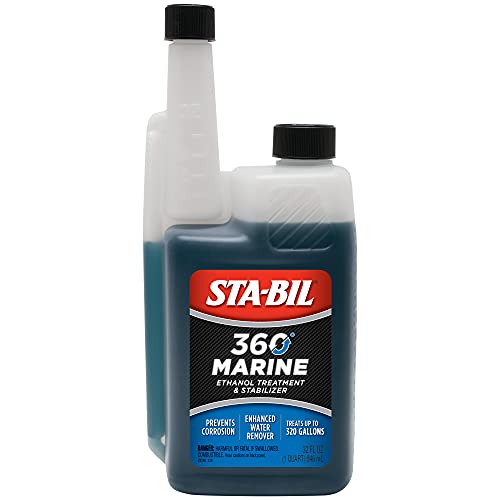
Better for active boats needing in-season cleaning and protection. This treatment cleans the entire fuel system, including injectors, lines, and pumps, using PEA additives. It removes water, gum, and varnish, while providing corrosion protection for internal components. Choose this if you want a comprehensive fuel-system cleaner plus stabilization. A caution: its performance depends on correct dosing and fuel choice; overdosing is unnecessary and could affect some engines.
STAR BRITE Star Tron Enzyme Fuel Treatment (32 Fl. Oz.)

Best for addressing ethanol-related issues and improving efficiency. Star Tron uses enzyme technology to help engines start reliably after inactivity and to prevent ethanol-related problems such as rough idling and reduced fuel economy. It also helps remove gum and varnish for cleaner fuel delivery. Opt for this if you operate boats in areas with ethanol blends and want ongoing fuel-system maintenance. Limitation: effectiveness depends on adherence to recommended dosing and storage conditions.
STA-BIL Storage Fuel Stabilizer, 32 oz

Best for larger fuel loads and longer winterizing cycles. This 32-ounce bottle treats about 80 gallons and emphasizes fuel preservation for up to 24 months, with corrosion protection to maintain fuel-system integrity. Not ideal if you need rapid-start performance after short storage windows; best used for seasonal storage scenarios with ample stabilization time.
Quicksilver Quickstor Fuel Treatment and Stabilizer, 12 Oz.

This stabilizer is geared toward long-term storage for boats and equipment like generators and lawnmowers. It stabilizes regular and ethanol-blended gas for up to two years, with a practical ratio of 1 oz treats 5 gallons. Best for boaters who store equipment off-season and want a simple, scalable solution. Limitation: smaller bottle size means more frequent refills for larger fuel tanks.
Buying Guide: Key Purchase Considerations
- Storage duration: If you store boats for months, prioritize fuels that preserve freshness for 18–24 months or more.
- Fuel compatibility: Ensure the product works with your fuel type (ethanol-rich or ethanol-free) and engine requirements.
- Fuel system needs: For boats with sensitive injectors or older systems, a cleaner-and-protectant formula can be beneficial.
- Ease of use: Consider dosing guidance and container size relative to your typical fuel volume.
- Corrosion protection: Look for products that guard metal parts and lines against ethanol-related damage.
- Enzyme vs. chemical cleaners: Enzyme-based treatments are gentler on long-term storage; chemical cleaners may provide more aggressive cleaning in-season.
Frequently Asked Questions
- How long can stabilized fuel sit before it starts to degrade?
– Storage stabilizers typically aim to preserve fuel for up to 6–24 months, depending on formulation and storage conditions. - Can I mix multiple stabilizers?
– It’s best to follow label directions and avoid mixing products with overlapping active ingredients unless the manufacturer approves. - Which stabilizer is best for ethanol gasoline?
– Enzyme-based Star Tron and ethanol-damage-prevention formulas from STA-BIL and others are designed for ethanol blends. - Do stabilizers really improve starting reliability after long storage?
– Yes, stabilizers can reduce moisture, prevent varnish, and protect fuel systems, aiding easier starts in many cases. - Should I run the engine after adding stabilizer?
– Generally, yes. Run the engine to circulate the stabilized fuel through the system to maximize effectiveness.