Choosing the right inflatable life vest for emergencies depends on how you plan to use it, your activity level, and your body size. The top options below are USCG-approved or provide strong buoyancy, quick inflation, and practical wearability for activities like boating, paddling, snorkeling, and casual swimming. This guide highlights who each vest is best for and why it was selected, with a concise buying table to compare key points at a glance.
| Product | Best For | Key Benefit |
|---|---|---|
| Onyx A/M-24 Automatic/Manual Inflatable Life Jacket | Boaters and anglers | Auto or manual inflation; compact and high buoyancy |
| BLUESTORM Cirrus26 Inflatable PFD | Paddlers and kayakers | Type V with Type 3 performance; comfortable all-day wear |
| Onyx M-16 Manual Inflatable Belt Pack | Active wearers with belt-style fit | Low-profile belt pack; manual inflate with oral backup |
| Bon amixyl 3-Pack 150N Automatic Vest | Group activities and learners | Auto-inflation with extra manual tube for adjustments |
| FOLALIFE 150N Automatic Inflatable Vest | Family and multi-user safety | High buoyancy; reflective strips and whistle |
Onyx A/M-24 Automatic/Manual Inflatable Life Jacket

USCG-approved inflatable vest that inflates automatically upon water immersion or via a manual inflation handle. It includes a back-up oral inflation tube. Suitable for users 16+ and over 80 lbs, fitting chest sizes 30”-52”.
Best for boaters and anglers who want reliable automatic inflation with a manual option for activities such as paddling or fly-fishing. The vest’s high buoyancy (22.5 pounds) helps keep the head above water. A caution: ensure you understand how manual conversion works before entering conditions where water exposure is likely.
Lyuwpes Inflatable Snorkel Vest
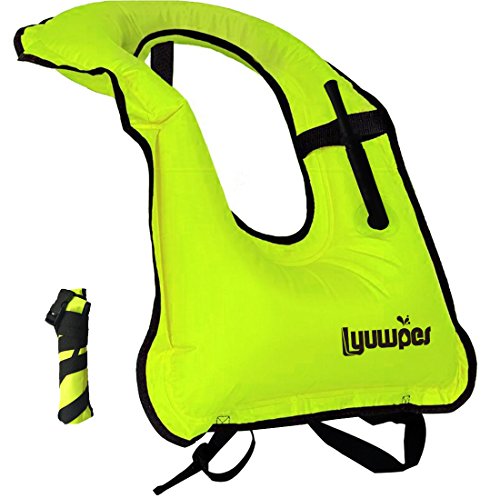
Snorkel-focused inflatable vest with a small footprint and buoyancy suitable for adults weighing 80–220 lbs. Features bright fluorescence for visibility and quick inflation/deflation, along with a comfortable neck-style collar.
Best for learners and snorkelers who need easy on/off and bright visibility. Choose this if you want a simple vest that stays comfortable during long snorkeling sessions. Limitation: sizing is described broadly; fit may vary by torso length and neck comfort.
BLUESTORM Cirrus26 Inflatable PFD

USCG-approved Type V PFD with Type 3 performance. Automatic inflation via a replaceable CO2 cylinder (included with purchase) or manual inflation using the pull cord, plus a back-up oral tube. Comfort-focused with an ergonomic collar and mesh back strap for all-day wear.
Best for paddleboarding, fishing, sailing, or kayaking where comfort matters. Better for activities that require extended wear and the option to add gear securely in the attached pocket. Caution: not all models include an extra CO2 cylinder; check the kit contents if you plan to replace cylinders separately.
Onyx M-16 Manual Inflatable Belt Pack

This USCG-approved belt pack inflates manually via the inflation handle and includes a back-up oral inflation to reach a total buoyancy of up to 26.5 pounds. It fits waists up to 52 inches and features a secure belt with an adjustable buckle and a D-ring for accessories.
Best for active users who want a low-profile vest with a secure, adjustable fit. Choose this if you prefer a belt-pack style to reduce bulk around the torso. Limitation: manual inflation means inflation is not automatic in water; ensure you are comfortable inflating manually when needed.
Bon amixyl 3-Pack 150N Automatic Life Jacket

Three-pack automatic life jackets with 150N buoyancy and an extra inflation tube for manual adjustment. Inflation occurs automatically on water contact in about three seconds. The design includes fully adjustable buckles for a snug fit and easy wear for multiple users or learners.
Best for group activities, or households with multiple users and varying sizes. Choose this to ensure backup manual inflation is available. Caution: color and model may vary; verify the item matches your needs and size expectations.
FOLALIFE 150N Automatic Inflatable Vest

Automatic inflation within about three seconds after water contact, with a 150N buoyancy rating to support heavier weights. The vest is built from nylon composite materials, includes reflective strips and an emergency whistle for low-light visibility and rescue signaling.
Best for families or mixed-use scenarios where visibility and signaling matter. Choose this for reliable auto-inflation and added signaling features. Limitation: price and kit contents may vary; confirm included components before purchase.
Buying Guide: Key Considerations For Selecting an Emergency Inflatable Life Vest
- Inflation Type: Auto vs manual inflation. Auto is ideal for hands-free buoyancy, while manual is better when water exposure is likely but you want control over the timing of inflation.
- Buoyancy Rating: Most inflatables use 150N or around 22–26 pounds of buoyancy. Higher buoyancy helps keep the head above water, especially for larger individuals or rougher conditions.
- Fit and Comfort: Look for adjustable belts, neck collars, and breathable backs. Low-profile designs reduce bulk for paddling or active use.
- USCG Approval: USCG-approved devices meet safety standards and provide a baseline level of protection; verify the model and category (Type V, Type III, etc.).
- Visibility and Signaling: Reflective patches and whistles aid in locating wearers in low light or emergency scenarios.
- Maintenance and Accessories: Check for replaceable CO2 cylinders, backup oral inflation options, and included repair or inflation components.
- Intended Use: Choose based on activity—boating, snorkeling, kayaking, or group use—since some vests are optimized for specific motions or environments.
- Sizing: Ensure chest or waist measurements align with the product’s stated range; belt-pack models require waist measurement and belt length considerations.
FAQ: Quick Answers For Buyers
- What does USCG approval mean for inflatable life vests?
– It indicates the product meets recognized safety standards in the United States, offering a baseline level of buoyancy and performance for wearers. - Should I choose auto-inflation or manual inflation?
– Auto-inflation is convenient for hands-free buoyancy during unexpected immersion; manual inflation provides control when the risk of water exposure is high but you can inflate proactively. - Can inflatable vests be worn over a wetsuit or in cold weather?
– Yes, many models are designed to work over or with wetsuits; consider fit and layering to maintain comfort and buoyancy. - Are there safety considerations unique to belt-pack inflatables?
– Belt packs are compact and low-profile but rely on manual inflation; ensure the belt fits securely and won’t snag during movement. - Do inflatable vests require maintenance?
– Yes, check the CO2 cylinder status, backup inflation tubes, and seals regularly; replace components as needed to ensure readiness. - Which vest is best for families with different users?
– Look for multi-pack options or products with broad size ranges and easy adjustability; consider the Bon amixyl 150N set for group use with backup inflation.