Answering the need for safer, easier boarding on boat trailers, these tongue ladders are designed to attach to the trailer tongue and provide stable steps with anti-slip surfaces and handrails. They’re best for boaters who board from the water or dock, storage managers who need frequent access, and anyone seeking durable, weather-resistant steps. This guide highlights five top options, detailing who they’re best for and why each stands out, plus practical buying tips and answers to common questions.
| Product | Best For | Why Pick It |
|---|---|---|
| Eastrexon 4 Step | Bass boat trailers and RVs | High durability with universal fit and safety handrail |
| Aupar 3 Step (3×3, 3×5) | Wet environments, frequent access | Three-step design with anti-slip tread and sturdy handrail |
| OUTPRIZE 3 Steps | Wide vessels, variable mounting | Left or right adjustable handrail for edge clearance |
| Toplamper 3 Step | Families and multi-user setups | 38.5″ handrail and weatherproof finish |
| NUOVEPE 3-Step | Saltwater or harsh climates | Rust-resistant hardware and strong, adjustable fit |
Eastrexon 4 Step With Handrail

The Eastrexon 4 Step is built from high-durability structural steel with a black powder-coated finish for rust resistance and longevity. It offers a universal fit with mounting holes to suit trailer tongues from 3″ to 5″ wide and up to 6″ high, making it compatible with bass boat trailers, pontoon trailers, and even some RVs. A non-slip surface paired with a safety handrail provides stable boarding and reduces slip risk. Best for: bass boat trailers or trailers where a fourth step improves accessibility. Limitation: installation requires accurate alignment to existing tongue dimensions for a secure fit.
Aupar 3 Step Universal Boat Trailer Step
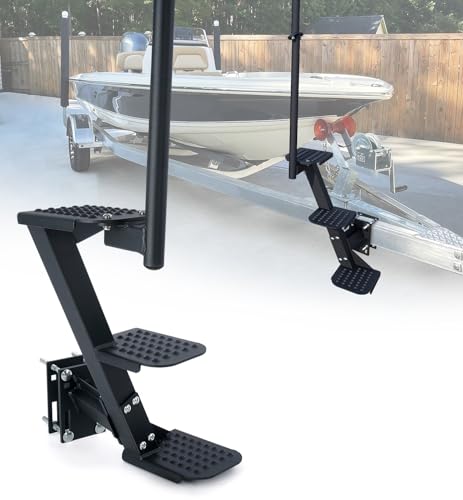
The Aupar 3 Step features heavy-duty solid steel construction with a black powder-coated finish for durability and corrosion resistance. Its three-step design, combined with a stable triangular support and a secure handrail, ensures safety during boarding in wet or dry conditions. It is explicitly designed for 3″ x 3″, 4″ x 4″, and 3″ x 5″ tongue configurations. Best for: users who want a reliable three-step solution with a robust handrail. Caution: ensure proper mounting to avoid edge interference with tall vessels.
OUTPRIZE 3 Step Heavy Duty Boat Trailer Step

The OUTPRIZE 3 Step provides a heavy-duty steel frame rated up to 450 lbs with a premium powder coating for rust and corrosion resistance. The design includes an adjustable left or right handrail to avoid interference with the boat edge, offering a safer, wider fit across diverse trailer setups. Best for: boats that require edge-friendly access and adjustable mounting. Limitation: larger footprint may not suit very narrow trailer tongues.
OUTPRIZE 2 Step Heavy Duty Boat Trailer Ladder
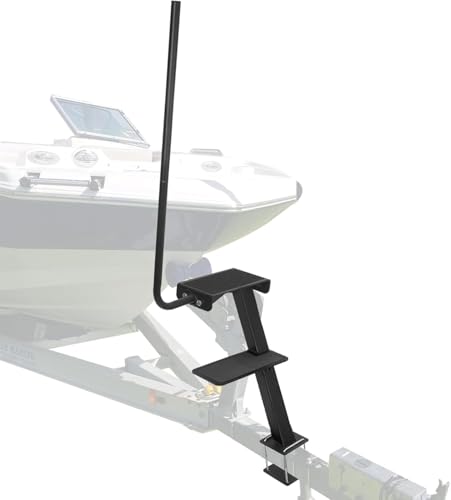
This two-step version from OUTPRIZE uses a sturdy steel frame rated for 450 lbs and a powder-coated finish to resist corrosion in tough conditions. The adjustable handrail on either side minimizes interference with the boat edge while delivering secure footing on each step. Best for: users who want a compact, lower-profile ladder. Caution: fewer steps may increase climbing effort for taller vessels.
Toplamper 3-Step Boat Trailer Steps

Toplamper offers a 3-step system rated for 300-350 lbs, with a heavy-duty steel frame and rust-proof matte black powder coating. A 38.5″ handrail provides added safety for all users, while the three-step height accommodates most trailers. Best for: family or multi-user setups where a higher handrail improves safety. Limitation: weight capacity guidance should be checked against the boat’s weight distribution and trailer tongue size.
Aupar 3 Step Standard Tongue Ladder

Aupar’s 3 Step Standard Tongue Ladder mirrors the brand’s emphasis on safety and durability, featuring a three-step design with a sturdy triangular support and secure handrail. The anti-slip surface helps in wet conditions and the product is designed for universal fit within 3″ x 3″, 4″ x 4″, and 3″ x 5″ tongue crossmembers. Best for: budget-conscious buyers needing reliable three-step access. Caution: confirm tongue crossmember size prior to purchase for best fit.
Buying Guide: Key Considerations For Boat Trailer Tongue Ladders
- Fitment And Mounting: Verify tongue width (3″–5″ common) and height. Some ladders offer adjustable mounting to suit different crossmember configurations.
- Number Of Steps: More steps improve access height but increase footprint and weight. Choose based on boat size and docking height.
- Safety Features: Look for anti-slip surfaces, secure handrails on both sides, and reinforced triangle supports for stability.
- Material And Finish: Powder-coated steel resists rust and corrosion; consider stainless variants if saltwater exposure is frequent.
- Weight Capacity: Ensure the ladder’s rated weight capacity matches or exceeds the combined weight of users and routine gear.
- Installation And Accessibility: Some models offer left/right handrail mounting to avoid edge interference. Check for necessary tools and mounting holes.
- Maintenance: Anti-slip mats can wear over time; check for replacement steps or mats and overall structural integrity after seasons of use.
Frequently Asked Questions
- What is the typical tongue ladder compatibility for most boats?
Most are designed to fit 3″ to 5″ wide trailer tongues, with mounting options up to 6″ high. - Which features improve safety the most?
Non-slip surfaces, secure handrails, and reinforced triangle supports significantly reduce the risk of falls. - Do I need professional installation?
Many ladders are DIY-installable with standard tools; however, ensure proper alignment and secure mounting to avoid movement while boarding. - Can these ladders handle saltwater exposure?
Yes, many are coated with rust-resistant finishes; verify hardware is corrosion-resistant for longevity in saltwater environments. - Is a higher step count always better?
More steps provide greater reach, but consider boat height and trailer clearance to avoid overshooting or tripping. - How should I maintain the ladder?
Regularly inspect for loose bolts, wear on anti-slip surfaces, and corrosion, tightening or replacing parts as needed.