Finding a boat ladder that delivers stable, slip-resistant boarding is essential for seniors and caregivers. This guide highlights five top options designed to minimize slips, maximize confidence, and fit a range of boats—from pontoons to yachts. Each selection is evaluated for ease of use, durability in saltwater, and overall safety. The top picks are best for retirees, family boaters with grandchildren, and anyone prioritizing stability and accessibility when getting in and out of the water.
Buyer’s quick reference table
| Product | Best For | Why Chosen |
|---|---|---|
| Mojiate 4-Step Heavy-Duty Stainless Steel Pontoon Boat Ladder | Senior-friendly, heavy loads | 316 stainless, extra-wide steps, dual handrails, telescoping self-supporting design |
| VEVOR Boat Ladder, 4 Steps | Compact spaces, easy storage | 304 stainless, folding with bungee retraction, 600 lb capacity |
| Hoffen 4 Step Pontoon Boat Ladder | Sturdy rear-entry boarding | 316 stainless, extra-wide steps, self-supporting, 600 lb capacity |
| Lippert SureStep Pontoon Ladder | Family use, pets and kids | Slip-resistant steps, stainless rails, corrosion-resistant |
| Mojiate 4-Step Aluminum Folding Boat Ladder | Lightweight, portable use | Aluminum frame, 500 lb capacity, non-slip pedals, removable |
Mojiate 4-Step Heavy-Duty Stainless Steel Pontoon Ladder

The Mojiate ladder uses marine-grade 316 stainless steel and an all-welded construction for superior saltwater resistance. Best for heavy use on pontoons, its 3.94″ wide anti-slip steps and 16.5″ tall dual handrails help older users maintain balance while boarding. The telescoping, self-supporting design reduces the need for deck supports and folds compactly to 16″ for storage. This setup is ideal for seniors who value extra stability and a straightforward stow-away footprint. Caution: taller users should verify deployed length matches their boarding height.
Who it’s best for: Seniors or caregivers who want extra-wide steps, robust handrails, and a self-supporting system that works without additional fixtures.
Why chosen: Combines corrosion resistance with a user-friendly fold-and-stow design, making daily dock use safer and simpler.
VEVOR Boat Ladder, 4 Steps

This 4-step ladder uses 304 stainless steel for solid corrosion resistance, suitable for saltwater environments. It features a space-saving foldable design with a bungee cord to secure the ladder when stowed and a 600 lb load capacity for a broad range of users. Best for boats needing a reliable, compact ladder that folds quickly after boarding. Limitation: 304 stainless is very durable but not the highest-grade marine alloy; consider 316-grade alternatives if frequently exposed to harsh sea conditions.
Who it’s best for: Families and boaters seeking a compact, easy-to-store ladder that still accepts heavier loads.
Why chosen: Strong, space-conscious design that remains dependable for regular use on rear-entry configurations.
4 Step Boat Ladder by Hoffen

The Hoffen ladder is built with marine-grade 316 stainless steel and features extra-wide steps with dual grab handrails. This model emphasizes safe boarding with anti-slip black pedals and a circle rope to keep the ladder closed when not in use. A 900 lb maximum load (per data) makes it suitable for heavier users, though the stated capacity should always be honored. Best for: boat owners who want a robust rear-entry ladder with a high safety/footing emphasis. Limitation: heavier structure requires more deliberate handling during storage.
Who it’s best for: Users prioritizing extra-wide steps and handrails for confident, stable boarding.
Why chosen: Combines strong materials with practical features like a rope closure to secure the ladder when stowed.
Lippert SureStep Pontoon Ladder
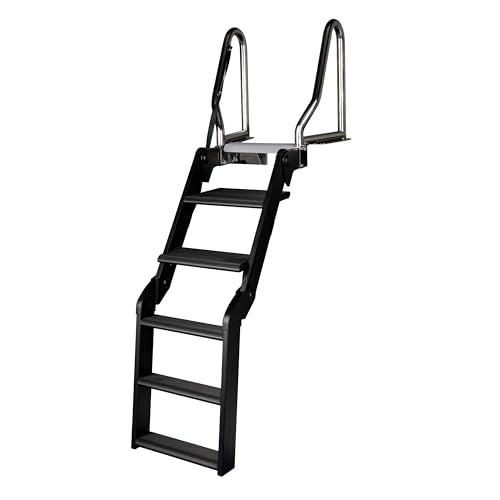
Lippert’s SureStep prioritizes safety with slip-resistant steps and stainless steel rails paired with powder-coated aluminum steps. It’s designed to meet ABYC standards and supports up to 400 lbs, offering reliable performance for multi-user boats. Best for families that need a dependable ladder with easy maintenance and strong corrosion resistance. Caution: lower maximum load than some heavy-duty models; avoid if you routinely carry very heavy loads or bulky equipment.
Who it’s best for: Families and pet owners seeking a durable ladder with excellent corrosion resistance and clear safety features.
Why chosen: The combination of stainless rails and powder-coated aluminum steps provides a balanced option for durability and maintenance in rough marine settings.
MVBouresu Boat Rope Ladder

This rope ladder uses a heavy-duty UV-resistant polyester line rated around 450 lbs with rigid resin steps designed to minimize inward collapse. It’s portable and compact, making it easy to store on smaller craft like inflatables or kayaks while still offering safe ascent and descent. Best for: those who want a lightweight, portable option that can be used across different watercraft. Limitation: rope ladders can feel less stable for elderly users on choppy water; consider additional stabilization if wave action is a concern.
Who it’s best for: Boaters seeking a flexible rope ladder that can be moved between boats or kept as a back-up option.
Mojiate 4-Step Aluminum Folding Boat Ladder

This ladder uses a lightweight aluminum frame with high-strength plastic pedals, offering corrosion resistance and a respectable 500 lb capacity. It folds to a compact 16″W x 30″H, making it versatile for pontoons, yachts, or docks where space matters. Best for: boaters who need a lightweight, removable option without compromising safety features. Limitation: aluminum can be less rigid than stainless steel under heavy, dynamic loads; monitor for any flex during use.
Who it’s best for: Boaters prioritizing portability and ease of installation, without sacrificing reasonable load capacity.
Buying Guide
Key considerations when selecting a ladder for elderly users include stability, grip, and ease of movement. Look for:
- Stepping surface: Choose wide, anti-slip steps that provide stable footing on wet surfaces.
- Handrails: Dual, tall handrails help maintain balance during boarding and provide confidence for seniors.
- Material: Stainless steel (316) offers superior corrosion resistance in saltwater; aluminum is lighter but may be less rigid.
- Mounting and storage: Self-supporting designs reduce deck modifications; folding ladders save space on compact boats.
- Load capacity: Ensure the ladder can accommodate the user plus gear, mindful of seniors who may carry bags.
- Maintenance: Look for corrosion resistance and simple cleaning to extend life in marine environments.
- Rear-entry vs. side-entry: Rear-entry ladders often provide easier access for people with limited mobility.
How to choose: If stability and grip are the top priorities, select models with extra-wide steps and dual handrails, even if they are heavier. For boats with tight storage space, favor foldable designs with compact stowage. If frequent deployments across different vessels are needed, portable and removable options can offer flexibility without permanent modifications.
FAQ
- What is the safest material for a boat ladder used by elderly passengers? Stainless steel (316) is highly resistant to corrosion and wear in saltwater environments, making it a strong safety choice.
- Should I prioritize extra-wide steps for an elderly person? Yes. Extra-wide steps improve footing and reduce the risk of slipping when stepping out of the water.
- Is a self-supporting ladder better than one that requires mounting? Generally, yes for ease of use and stability, especially for frequent docking on pontoon or deck boats.
- Are rope ladders safe for seniors? Rope ladders can be less stable on choppy water; consider models with rigid steps or solid handrails for added security.
- What load capacity is ideal? A ladder with at least 400–600 lbs capacity covers most users plus gear and reduces the risk of overloading during boarding.
- Do I need to worry about maintenance? Yes—rinse with fresh water after saltwater use and inspect for corrosion or loose hardware regularly.