Direct answer: choose an anchor trolley system that combines durability, simple installation, and reliable pulleys for steady positioning in wind and currents. This guide highlights five standout options ideal for hobbyists and serious anglers alike. The selections cover heavy‑duty builds, stainless steel hardware, and adaptable installation methods, whether you kayak in freshwater or saltwater. Each option suits different needs—from quick installs to more robust, shore-ready setups.
| Product | Best For | Key Benefit |
|---|---|---|
| Atader Heavy Duty Anchor Trolley Kit | Saltwater or Freshwater kayaking | Solid two-installation options |
| YUSOVE Kayak Anchor Trolley Kit | All-weather stability | 316 stainless steel components |
| YakAttack LeverLoc HD Anchor Trolley | Heavy-duty use | HD upgrade with extra pad hooks and backing plates |
| ISURE MARINE Anchor Trolley Kit | Versatile rigging and dock-line use | Removable line from ring for dock purposes |
| Atader Standard Anchor Trolley Kit | Budget-friendly, quick installs | Creative clamp base for rope security |
Atader Heavy Duty Anchor Trolley Kit

The Atader Heavy Duty Anchor Trolley Kit is designed for demanding wind and current conditions. It offers two installation methods: heavy-duty backing plates for a rock-solid mount and standard self-threading screws for a faster setup. Best for saltwater environments and anglers who want a secure, long-lasting system. The kit includes stainless screws and a robust pulley arrangement to keep the line taut and the kayak stable.
Who it’s best for: saltwater kayakers and coastal anglers who value durability and two installation options. Why selected: the backer-plate heavy-duty setup reduces loosening in strong currents. Caution: heavier components may require more time to install during the initial setup.
YUSOVE Kayak Anchor Trolley Kit

The YUSOVE kit emphasizes corrosion resistance with 316 stainless steel ring, pad eyes, and carabiner. It includes a 30-foot paracord and a robust 5 mm line designed to resist deformation under heavy use. The system is compatible with rugged weather and doubles as a dock line in certain setups, making it versatile for both anchored stints and docking.
Who it’s best for: kayakers who fish in mixed conditions and want long service life from stainless components. Why selected: stainless steel hardware offers enhanced corrosion resistance. Caution: ensure the elastic rings are properly seated to avoid line slack when underway.
YakAttack LeverLoc HD Anchor Trolley
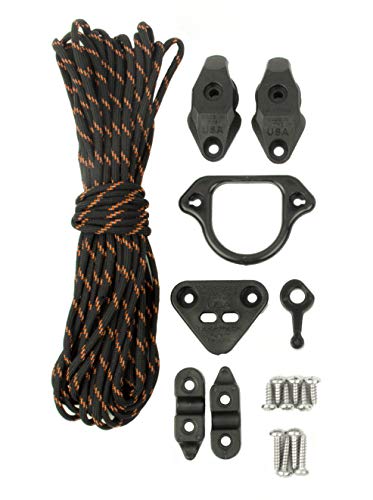
The YakAttack LeverLoc HD kit features an HD upgrade with extra PadHooks and backing plates for a more robust installation than standard kits. The LeverLoc line clamp locks the trolley line in place with a simple flip, ensuring stability when deployed. It is designed for users who want a high-performance system with fewer adjustments after setup.
Who it’s best for: paddlers needing a heavy-duty, rock-solid anchor trolley with quick-release capability. Why selected: the HD upgrade provides enhanced durability for frequent use. Caution: the HD kit may require more initial assembly time than basic kits.
ISURE MARINE Kayak Canoe Anchor Trolley Kit
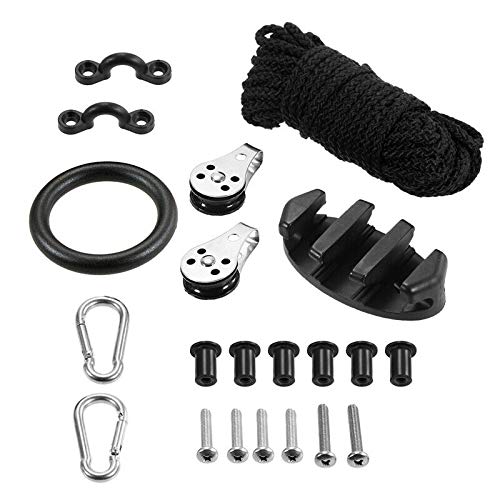
The ISURE MARINE kit emphasizes durable, corrosion-proof stainless steel and nylon hardware, plus a reflective tracer on the paracord for visibility. It doubles as a dock line by allowing the trolley line to be removed from the ring for docking purposes. Pulleys are flush-mounted to maintain a clean, low-profile deck look and reduce line slap.
Who it’s best for: kayakers who need a versatile system that functions well both on the water and at the dock. Why selected: the removable line feature enhances docking flexibility. Caution: ensure all fasteners are tightened correctly to avoid line movement in choppy water.
Atader Standard Anchor Trolley Kit

The standard Atader kit prioritizes quick, easy installation with detailed guidance. A creative clamp base locks the rope via toggling and can clip the Trolley Ring under the base to prevent line jumping when not in use. The system uses high-quality pulleys for smooth, quiet operation and places the trolley line along the side of the kayak to avoid interference with paddling.
Who it’s best for: budget-conscious paddlers who want practical, reliable performance with straightforward setup. Why selected: the clamp base design reduces line snag and makes storage easier. Caution: fewer heavy-duty components than premium HD kits, so consider expected currents and wind conditions before relying on it in extreme environments.
Buying Guide: Key Purchase Considerations
- Durability vs. installation effort: Heavy-duty kits offer stronger support in strong currents but may require more time to install.
- Materials: Stainless steel hardware resists corrosion; aluminum and nylon options may be lighter but less durable in saltwater.
- Installation style: Backing plates vs. self-threading screws – choose based on mounting surface and expected forces.
- Line and pulleys: Look for quiet operation and flush-mounted pulleys to minimize deck noise and line snagging.
- Docking compatibility: Some kits double as dock lines; consider whether you’ll anchor, dock, or both.
- Length and reach: Ensure rope length matches your boat length and water conditions, typically around 20–30 feet or more.
FAQ
- Q: What is the main advantage of a heavy-duty anchor trolley? A: It provides greater stability in strong currents and waves, reducing the chance of drifting or loosening the anchor line.
- Q: Can these kits be used on all kayak models? A: Most kits are designed to fit standard deck configurations, but always check mounting surface compatibility and hardware size.
- Q: Are the pulleys and rings corrosion-resistant? A: Reputable kits use stainless steel or sealed hardware to resist rust in saltwater.
- Q: Is it necessary to install backing plates? A: Backing plates offer stronger support for heavy loads and minimize deck damage in harsh conditions.
- Q: Can I reuse the trolley line for docking? A: Some kits allow removing the line from the ring to use it as a dock line; verify this feature in the product description.
- Q: How long does installation typically take? A: Standard installs often take about 10 minutes; heavy-duty setups may take longer due to additional backing plates and hardware.